
DIEZ Approval Dubai: RASM Architectural Consultancy (2026)
If you’re planning to build, renovate, or develop property in Dubai, navigating the DIEZ approval process is one of the most critical steps you cannot afford to overlook. Whether you’re a developer, investor, or business owner operating within a free zone or industrial zone, securing DIEZ (Dubai Industrial City and related zone authority) approvals determines whether your project moves forward — or stalls indefinitely.
In 2026, Dubai’s regulatory landscape has become more streamlined yet more demanding in terms of technical compliance. That’s exactly where a specialist firm like RASM Architectural Consultancy becomes your most valuable partner.
This complete guide explains everything you need to know about DIEZ approval in Dubai — what it is, who needs it, the step-by-step process, timelines, costs, common rejection reasons, and how RASM Architectural Consultancy delivers results for clients across the UAE.
What Is DIEZ Approval in Dubai?
DIEZ stands for the Dubai Industrial City free zone authority (also referenced in broader contexts as Dubai’s Industrial and Economic Zone authorities). DIEZ approval refers to the official regulatory clearance required before commencing any construction, fit-out, modification, or infrastructure work within designated industrial and free zone areas in Dubai.
These approvals are mandatory and issued by the relevant authority overseeing the specific zone. Without them, no construction permit, no occupancy certificate, and no operational license can be legally obtained.
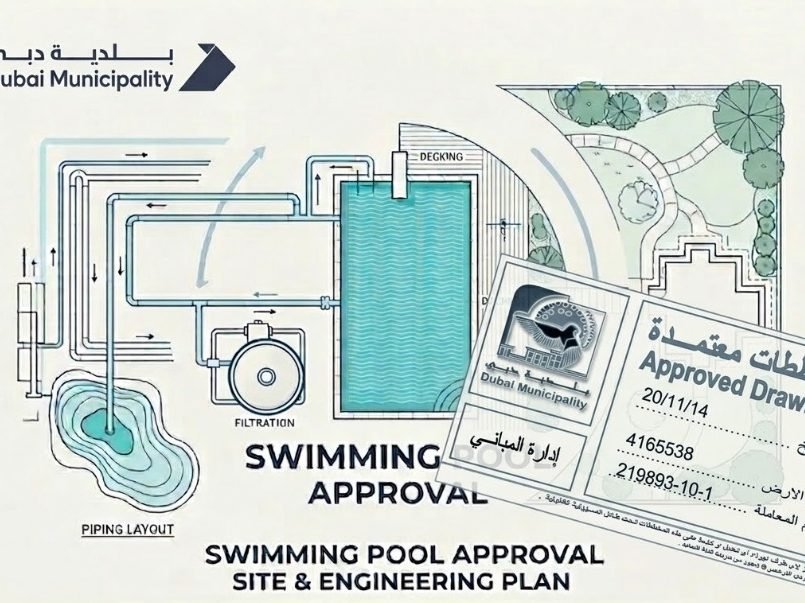
DIEZ approvals are distinct from standard Dubai Municipality (DM) approvals because they are governed by zone-specific rules, design standards, and usage categories that don’t always apply to mainland Dubai developments.
Who Needs DIEZ Approval?
DIEZ approval is required for any entity or individual that plans to:
Construct new buildings or facilities within a DIEZ-regulated zone, including warehouses, factories, logistics hubs, and commercial units.
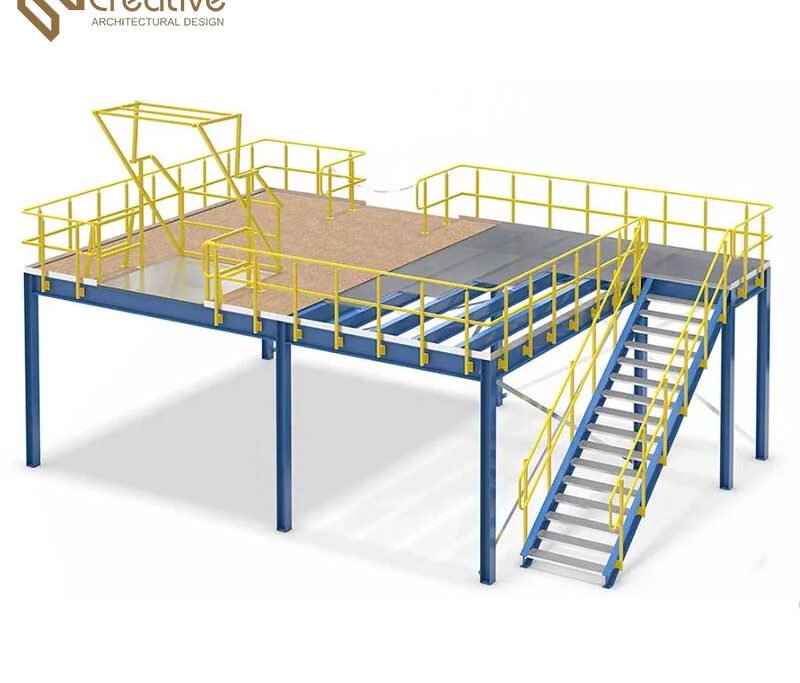
Modify or expand existing structures, including internal partitioning, mezzanine additions, façade changes, or any structural alteration.
Set up industrial or commercial operations that require built infrastructure within the zone boundaries.
Install utilities and MEP systems including electrical, plumbing, HVAC, fire suppression, and ELV systems within zone-controlled premises.
Conduct fit-out works in leased units within industrial or mixed-use free zone developments.
In short: if your project sits within a DIEZ-regulated area, approval is not optional — it is legally mandatory.
DIEZ Approval vs. Dubai Municipality Approval — Key Differences
Many applicants confuse DIEZ approvals with standard Dubai Municipality (DM) building permits. Understanding the distinction is essential.
| Factor | DIEZ Approval | Dubai Municipality (DM) Approval |
|---|---|---|
| Jurisdiction | Free zone / industrial zones | Mainland Dubai |
| Authority | Zone-specific authority (e.g., DIEZ, JAFZA, DAFZA) | Dubai Municipality |
| Design Standards | Zone-specific master plan guidelines | DM building codes |
| Use Categories | Industrial, logistics, manufacturing | Residential, commercial, mixed-use |
| NOC Requirements | Multiple zone-specific NOCs | DM-standard NOC process |
| Consultant Registration | Must be registered with the zone authority | DM-registered consultants |
RASM Architectural Consultancy is registered with the relevant Dubai authorities and experienced in navigating both pathways — making them a one-stop solution regardless of whether your project is on the mainland or within a free zone.
Step-by-Step DIEZ Approval Process in Dubai (2026)
Step 1: Initial Feasibility Assessment
Before submitting any application, your appointed architectural consultant should conduct a feasibility study that examines:
- Zone master plan compliance
- Permitted land use classification
- Plot ratio and building height limitations
- Setback requirements and boundary restrictions
- Environmental and fire safety suitability
RASM Architectural Consultancy offers a detailed pre-submission feasibility review that identifies potential red flags before a single document is submitted, saving clients weeks of delays.
Step 2: Appointment of a Registered Consultant
DIEZ authorities require that all submissions be made by an officially registered architectural and engineering consultancy. Self-submissions by developers or business owners are not accepted.
RASM Architectural Consultancy holds the necessary registrations and certifications required to submit applications directly to DIEZ authorities on behalf of clients — ensuring compliance from day one.
Step 3: Preparation of Architectural Design Drawings
The core of any DIEZ application is the design documentation package, which must include:
- Site layout plan and boundary survey
- Floor plans at all levels
- Elevations (all four sides)
- Sections showing structural and spatial relationships
- Roof plan
- Structural drawings and calculations
- MEP (Mechanical, Electrical, and Plumbing) design drawings
- Fire safety and life safety plans
- Civil and infrastructure drawings
All drawings must conform to DIEZ authority drafting standards, submitted in approved formats (typically DWG and PDF), and comply with UAE Fire and Life Safety Code, Dubai Building Code, and any zone-specific addenda.
RASM’s in-house team of architects, structural engineers, and MEP specialists prepares fully coordinated design packages that meet authority requirements on first submission.
Step 4: Pre-Submission NOC Collection
Most DIEZ projects require No Objection Certificates (NOCs) from multiple entities before the primary application can be accepted. These may include:
- Dubai Civil Defence — fire suppression, detection, and evacuation compliance
- DEWA (Dubai Electricity and Water Authority) — power and water connection clearance
- Telecommunications Regulatory Authority (TRA) — ELV and ICT infrastructure
- Roads and Transport Authority (RTA) — access road and traffic impact clearances
- Dubai Municipality — where cross-jurisdictional overlap exists
- Environmental Authority — for industrial projects with emission or waste considerations
Collecting these NOCs in parallel rather than sequentially is a skill that experienced consultancies like RASM have mastered — reducing overall project timelines significantly.
Step 5: Formal Application Submission
Once all drawings are finalized and NOCs are assembled, the formal application is submitted to the DIEZ authority’s portal or processing office. The submission package typically includes:
- Completed application forms
- Title deed or lease agreement copy
- Trade license copy
- Passport and Emirates ID copies (owner/authorized signatory)
- All technical drawings (stamped by registered consultant)
- Structural calculations report
- Bill of quantities (BOQ) for certain project types
- NOC certificates from relevant authorities
RASM manages the entire submission process on behalf of clients, including responding to authority queries and providing supplementary documentation when requested.
Step 6: Authority Review and Technical Inspection
Upon submission, the DIEZ authority’s internal technical team reviews the application. This process may involve:
- Desk review of submitted drawings for code compliance
- Site inspection to verify existing conditions
- Technical committee review for complex or large-scale projects
- Requests for clarification, revision, or supplementary information (known as “comments rounds”)
Projects submitted by experienced consultancies with strong track records — like RASM — typically encounter fewer comments and faster approvals.
Step 7: Approval Issuance and Permit Collection
Once all conditions are satisfied, the authority issues:
- Initial Approval / Development Permit — allows construction to begin
- Construction Completion Certificate (CCC) — issued after physical construction is inspected and verified
- Occupancy Certificate — allows the facility to be occupied and operated
Each stage requires specific milestone documentation and inspections. RASM coordinates all inspection appointments and ensures clients are inspection-ready at every stage.
DIEZ Approval Timeline: What to Expect in 2026
Timelines vary depending on project complexity, completeness of submission, and authority workload. Typical ranges are:
| Project Type | Estimated Timeline |
|---|---|
| Minor fit-out works | 2–4 weeks |
| Standard warehouse / industrial unit | 4–8 weeks |
| New construction (light industrial) | 8–14 weeks |
| Large-scale industrial complex | 14–24 weeks |
| Projects requiring multiple NOCs | Add 2–6 weeks |
RASM Architectural Consultancy has a track record of delivering approvals within the lower end of these timeframes due to their thorough pre-submission process, authority relationships, and zero-defect documentation standard.
Common Reasons for DIEZ Approval Rejection (and How to Avoid Them)
Understanding why applications get rejected helps you avoid costly delays. The most frequent rejection reasons include:
Incomplete documentation packages — Missing drawings, unstamped documents, or expired NOCs are the single most common cause of rejection or delays.
Non-compliant design — Drawings that exceed plot ratio limits, violate setback requirements, or fail fire code standards are returned for redesign.
Unregistered consultant submissions — Applications submitted by consultants who lack valid authority registration are automatically rejected.
Structural calculation errors — Incorrect load calculations, missing geotechnical reports, or inadequate foundation design are flagged during technical review.
Outdated drawing standards — Using deprecated drawing formats, non-compliant title blocks, or incorrect scale conventions leads to rejection.
MEP design gaps — Missing or inadequate fire suppression, HVAC design, or electrical load schedules are commonly flagged.
RASM’s multi-disciplinary internal review process catches these issues before submission — their quality control checkpoint system is specifically designed to mirror what authority reviewers look for.
Why Choose RASM Architectural Consultancy for DIEZ Approvals?
Deep Regulatory Expertise
RASM Architectural Consultancy has extensive experience navigating the specific regulatory requirements of Dubai’s industrial and free zone authorities. Their team stays current with every update to the Dubai Building Code, UAE Fire and Life Safety Code, and zone-specific design guidelines — ensuring submissions always reflect the latest requirements.
Authority-Registered Practice
RASM holds valid registrations with the relevant Dubai and UAE authorities, allowing them to submit directly on behalf of clients without the delays caused by third-party intermediaries.
Multi-Disciplinary In-House Team
Rather than outsourcing structural or MEP components, RASM houses architects, structural engineers, civil engineers, and MEP specialists under one roof. This integrated approach ensures drawing coordination is tight, conflicts are resolved before submission, and the authority receives a coherent, fully coordinated package.
End-to-End Project Management
From initial feasibility through to occupancy certificate, RASM manages every touchpoint — NOC collection, submission, authority correspondence, site inspections, and milestone reporting. Clients receive regular progress updates and a dedicated project manager throughout.
Proven Track Record Across Dubai Zones
RASM has successfully delivered DIEZ and related zone approvals for warehouses, manufacturing facilities, logistics hubs, data centers, commercial units, and mixed-use developments across Dubai’s industrial and free zone landscape.
Client-Centric Communication
One of the most consistent points of positive feedback from RASM clients is the clarity and frequency of communication. In an industry where consultancies often go dark after submission, RASM maintains proactive contact and transparent updates — so clients always know exactly where their approval stands.
DIEZ Approval Costs in Dubai (2026 Overview)
While exact costs depend on project scale, zone authority, and specific requirements, DIEZ-related costs typically fall into these categories:
Authority fees — Paid directly to the DIEZ authority, these vary by project type, built-up area, and zone. Industrial construction permits typically range from AED 5,000 to AED 50,000+.
NOC fees — Each authority (Civil Defence, DEWA, RTA, etc.) charges its own processing fee, typically ranging from AED 500 to AED 5,000 per NOC.
Consultancy fees — Fees charged by your architectural and engineering consultant for design, documentation, and submission management. These vary significantly by firm and project complexity.
Testing and inspection fees — Required for certain project types, including MEP commissioning, structural load testing, and fire system certification.
RASM provides clear, itemized fee proposals upfront — with no hidden charges — so clients can budget accurately from the outset.
Frequently Asked Questions (FAQs)
Can I submit a DIEZ application without an architectural consultant?
No. DIEZ authorities in Dubai require that all technical submissions be made by a registered and licensed architectural/engineering consultancy. Individual applicants or business owners cannot submit directly.
How long is a DIEZ approval valid?
Most DIEZ approvals are valid for 12 months from date of issue. Extensions can be applied for, subject to authority discretion and any design changes.
Do I need DIEZ approval for minor interior works?
Yes, in most cases. Even minor fit-out works within DIEZ-regulated zones require at minimum a fit-out permit and may require Civil Defence and DEWA clearances depending on the scope.
Can RASM handle my project if I’m based outside the UAE?
Yes. RASM regularly works with international clients, coordinating documentation, digital submissions, and authority correspondence remotely. A local authorized signatory may be required for certain forms.
What happens if construction begins without DIEZ approval?
Unauthorized construction within DIEZ zones can result in stop-work orders, demolition notices, financial penalties, and complications with your trade license and insurance. It is never advisable to commence work without valid approvals.
How does RASM keep me updated on my application status?
RASM assigns a dedicated project coordinator to every client. Status updates are provided at each key milestone, and clients have direct access to their coordinator for any queries throughout the process.
Getting Started with RASM Architectural Consultancy
If you’re planning a project within a DIEZ-regulated zone in Dubai, the earlier you engage a specialist consultancy, the smoother your approval journey will be. Early involvement allows RASM to:
- Shape the design in line with zone authority expectations from day one
- Identify and resolve site or zoning constraints before they become expensive problems
- Begin NOC applications in parallel with design development
- Establish authority relationships specific to your project location
To initiate a consultation with RASM Architectural Consultancy, provide the following information:
- Project location (zone name and plot number if available)
- Intended use (warehouse, manufacturing, office, retail, mixed-use, etc.)
- Approximate built-up area
- Target completion date
- Any existing approvals or previous submissions on the plot
RASM’s team will revert with a detailed scope of services proposal and fee structure — typically within 48 hours of initial enquiry.
Conclusion
The DIEZ approval process in Dubai is a non-negotiable regulatory pathway for any industrial, commercial, or mixed-use development within the zone’s jurisdiction. In 2026, with authorities demanding greater technical precision, environmental compliance, and digital submission accuracy, having the right architectural consultancy partner isn’t just an advantage — it’s essential.
RASM Architectural Consultancy combines deep regulatory knowledge, multi-disciplinary technical capability, authority-registered status, and a client-first approach to consistently deliver approvals on time and to the highest standards.
Whether you’re launching a new industrial facility, expanding an existing operation, or fitting out a leased commercial unit within a Dubai free zone, RASM has the expertise and track record to navigate every step of the DIEZ approval process on your behalf.
Ready to begin your DIEZ approval journey? Contact RASM Architectural Consultancy today for a no-obligation project assessment.